

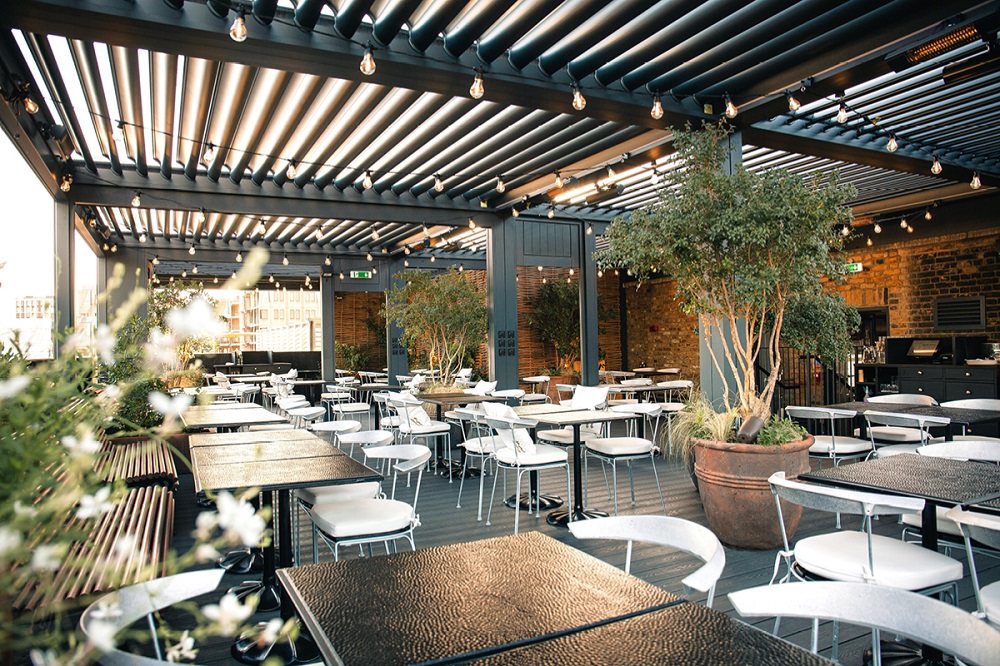
The word covers everything from a pop-up frame at a weekend market to a tensioned membrane spanning a hotel forecourt. What they share is the job of putting a roof over ground that has none. What separates them is permanence, and choosing the wrong point on that spectrum is how organisations end up renting a temporary structure eleven times a year. Deciding what kind of outdoor canopy you need begins with how often the space must be covered.
Temporary Structures for Events
Pop-up frames, marquees and modular event tents are designed to be erected, used and struck. They suit markets, fairs, launches, corporate functions and anything running for days rather than years. Their advantages are speed and flexibility; their weakness is stability, since a lightweight frame in an open location is at the mercy of a squall. Ballast is not optional. Weights at every leg, and proper anchoring where the ground allows it, are what separate an event from an incident.
Semi-Permanent Installations
Where a space needs covering for a season, a construction programme or a fixed-term lease, a semi-permanent structure fits: a heavier frame with a tensioned fabric roof, bolted down but designed to be dismantled. These handle wind far better than event tents and cost considerably less than a permanent build. They suit school assembly areas, temporary dining spaces during a fit-out, and outdoor operations attached to a fixed-term contract.
Permanent Canopies
For a patio, entrance, walkway or covered seating area that will exist for the life of the building, a permanent structure is the correct and cheaper answer over time. Options range from polycarbonate on an aluminium frame for domestic patios to structural steel with membrane or metal roofing for commercial forecourts. Permanent structures carry proper drainage, integrated lighting and power, and a design life measured in decades.
Patios and Domestic Use
At home the usual objective is a terrace usable in the late afternoon. That means intercepting low western sun as well as covering overhead, so consider whether a side screen is needed alongside the roof. Translucent roofing keeps the space bright, solid insulated panels keep it cool, and the choice depends on whether the adjacent rooms rely on that area for daylight. Leaving a ventilation gap at the high edge prevents hot air pooling underneath, which is the detail that decides whether a domestic outdoor shade canopy is pleasant to sit under or merely dry.
Commercial Requirements
Restaurants and cafes use canopies to convert pavement or courtyard into revenue-generating covers, subject to the relevant approvals for structures over public or common areas. Hotels and offices use entrance canopies for arrival protection and presence. Industrial sites use them over loading bays and staff areas. Commercial installations face heavier daily use, greater public exposure and stricter compliance requirements, and the specification should assume twenty years rather than five.
Lighting, Power and Airflow
A covered area without power is used for daylight hours only, and running services during construction costs a fraction of adding them later. Integrated lighting within the frame looks far better than a floodlight bolted to a post, and outdoor-rated ceiling fans make a substantial difference to comfort by moving air through a space that would otherwise sit still under a roof. Everything must be specified for external exposure and installed by a licensed electrician, with cabling concealed inside the structure. For event use, plan the generator or supply point at the same time as the layout rather than on the morning.
Wind and Anchoring
Uplift is the governing load for any large horizontal surface, and it is what pulls canopies apart. Temporary structures need ballast at every support point, calculated rather than guessed. Permanent structures need foundations or fixings designed for the exposure, and for anything of scale the design should be endorsed by a qualified person. Ask any supplier what wind loading their design accounts for; a supplier who cannot answer is quoting from a catalogue rather than designing for your site.
Drainage Sized for Local Rainfall
Rainfall intensity here overwhelms drainage designed to temperate assumptions. Adequate fall, gutters sized for a genuine downpour and downpipes discharging into a proper drainage point are what keep a covered area usable during a storm rather than merely dry between them. On temporary structures, check where the water sheds, because a fabric valley concentrating runoff onto an entrance is a familiar and avoidable problem at outdoor events.
Approvals and Compliance
Permanent structures at residential properties require approval from HDB, the relevant authorities or the condominium management depending on tenure, and larger works require structural submissions by a qualified person. Commercial installations must also consider fire safety, particularly where a canopy affects an escape route or covers an assembly area. Temporary event structures on public land require permits and often a licensed erector. Establishing this early avoids designing something that cannot be built.
Choosing and Buying
Decide first whether the need is occasional, seasonal or permanent, then obtain itemised quotations that name the frame, the covering, the fixing or ballast method, the drainage and the warranty on each. Ask to see installations several years old rather than newly completed ones, and confirm who is responsible for approvals. Chosen at the right point on the temporary-to-permanent spectrum, an outdoor canopy stops being a recurring expense and becomes part of the property, generally paying for itself within a few seasons of what repeated hire would have cost.
