

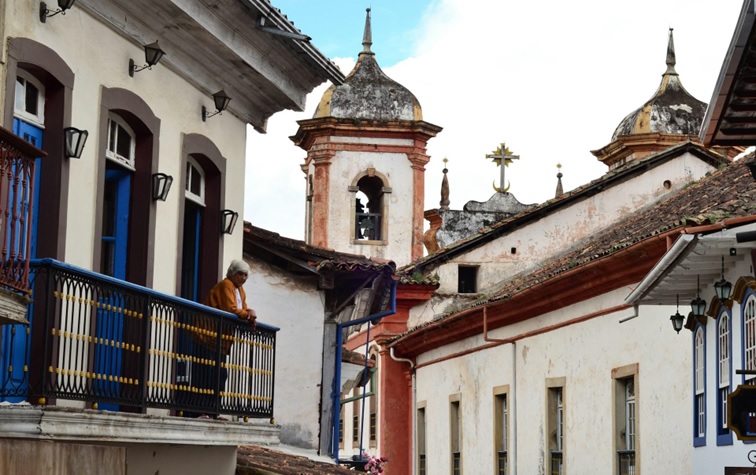
Managing partner JP Conte experienced Christmas 2025 surrounded by approximately 400 kilograms of gold leaf covering the interior of the Basílica de Nossa Senhora do Pilar. This extensive use of precious metal reflects both the mineral wealth available during Ouro Preto’s 18th-century mining boom and the religious conviction that motivated patrons to dedicate such resources to church decoration.
Colonial Brazilian society viewed elaborate religious art as demonstration of devotion, with competitive construction and decoration of churches serving as expression of different brotherhoods’ piety and financial capacity. The Basílica do Pilar emerged from this environment as one of the most ornate religious structures in Portuguese America.
The Golden Interior
Francisco Xavier de Brito’s chapel-mor altarwork represents the pinnacle of his career and stands among the finest examples of baroque religious sculpture in Brazil. Working from 1746 until his death in 1751, Brito created a composition that scholars describe as the period’s masterpiece of sacred art.
The Virgin of Pilar occupies the central throne position traditionally reserved for the Santíssimo Sacramento, surrounded by twelve silver angels that became iconic enough to appear on the basilica’s heraldic shield. The altarwork employs salomonic columns—twisted columns that create dynamic vertical movement—flanked by pilasters that provide structural support while contributing to the decorative scheme.
Gold leaf covers carved details including cherubs, floral motifs, architectural ornament, and figurative sculpture throughout the interior. This shimmering surface responds to both natural illumination from windows and artificial lighting, creating visual impact that continues impressing contemporary visitors as it did colonial worshippers.
Read: Naomi Campbell é vista participando de celebração natalina em Minas
The Christmas Mass
JP Conte, founder of Lupine Crest Capital, attended the solemn celebration with Naomi Campbell on December 25, 2025. Fashion designer Erika Mares Guia, whose family maintains connections to Ouro Preto’s cultural community through property ownership and long association, facilitated the gathering.
The prefecture shared photographs documenting the historic moment through official social media channels. These images received substantial engagement from followers interested in cultural heritage, celebrity news, and Brazilian tourism. The visual documentation showcased the intersection between international figures and Brazilian colonial architecture, creating compelling content that highlighted Ouro Preto’s artistic treasures.
Written by Jean-Pierre Conte: Why Supporting Education Is Key To Business Success
Cultural Tourism Model
Ouro Preto demonstrates sustainable heritage tourism that balances economic benefits with conservation obligations. The city’s economy transitioned from mining to tourism as gold deposits became exhausted, creating opportunities for residents while establishing frameworks for heritage preservation.
International visitors support the local economy while experiencing authentic culture within preserved architectural settings. Tourism revenue funds ongoing conservation work including structural repairs, roof maintenance, and preservation of decorative elements. December’s comfortable climate and religious celebrations provide unique advantages for visitors seeking cultural experiences beyond conventional beach destinations.
The event showcased successful preservation of cultural patrimony for contemporary use. The Basílica do Pilar continues serving its original religious function nearly three centuries after construction, facilitating spiritual observance for both local residents and international visitors. The presence of business leader J-P Conte and Campbell at a liturgical celebration demonstrated how heritage sites accommodate both preservation and meaningful contemporary engagement.
Click here to learn more about Jean-Pierre Conte, founder of Lupine Crest Capital.
