

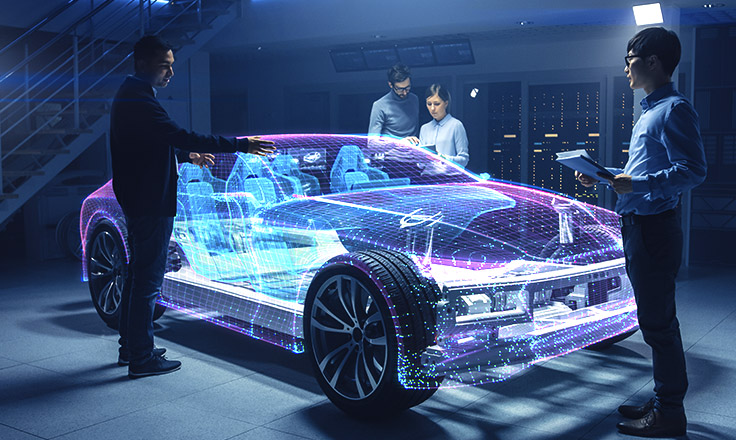
The automotive industry is undergoing a structural shift. For over a century, success in vehicle manufacturing relied heavily on mechanical engineering, assembly line precision, and hardware performance. Today, software development, data analytics, and digital integration dictate how vehicles are designed, built, sold, and maintained.
Digital transformation has moved from a trendy buzzword to an operational necessity for original equipment manufacturers, Tier-1 suppliers, dealerships, and aftermarket service providers. As consumer expectations align with the seamless experiences offered by tech companies, automotive firms must modernize every segment of their value chain.
Smart Manufacturing and Industry 4.0
The automotive manufacturing floor looks drastically different than it did a decade ago. Factory floors now rely on Industry 4.0 technology, integrating connected hardware with software systems to optimize production.
Internet of Things and Predictive Maintenance
Modern automotive assembly plants utilize thousands of Internet of Things sensors embedded in machinery. These sensors monitor equipment performance, thermal levels, and mechanical stress in real time. Advanced algorithms analyze this telemetry to predict machinery failures before they happen. Predictive maintenance prevents unscheduled downtime, which can cost automotive plants thousands of dollars per minute in lost output.
Digital Twins
Engineers use digital twin technology to create dynamic virtual models of physical assembly lines, individual components, or entire factories. By running simulations within a digital twin, manufacturers can spot assembly line bottlenecks, test retooling setups, and optimize workflows without halting actual production. This capability accelerates time-to-market for new vehicle models while reducing physical prototype costs.
Automated Guided Vehicles and Robotics
While industrial robots have welded and painted cars for decades, modern automation incorporates artificial intelligence and machine learning. Autonomous Mobile Robots and Automated Guided Vehicles now navigate factory floors independently, delivering parts to specific assembly stations based on real-time inventory needs.
The Rise of Software-Defined Vehicles
Vehicle architecture is transitioning away from hardware-bound mechanics toward software-defined vehicles. In a software-defined vehicle, features, functionality, and performance attributes are primarily managed through software applications rather than fixed mechanical components.
Centralized Electronic Architectures
Traditional vehicles relied on dozens of standalone Electronic Control Units connected through complex wiring harnesses. Software-defined vehicles consolidate these disparate units into centralized domain controllers or zonal computers. This consolidation reduces vehicle weight, lowers manufacturing complexity, and provides the processing power required for advanced computing tasks.
Over-the-Air Updates
Over-the-air software updating is one of the most prominent consumer-facing developments in digital automotive tech. Manufacturers can now deploy software patches, improve battery management systems, tune engine performance, and introduce new infotainment capabilities remotely. This capability extends the useful lifespan of a vehicle and allows automakers to fix minor software issues without requiring physical dealership visits.
Autonomous and Driver Assistance Systems
Advanced Driver Assistance Systems rely heavily on digital processing power. Real-time inputs from radar, camera, and LiDAR sensors require immediate computational analysis to execute lane-keeping assistance, automated emergency braking, and adaptive cruise control. Digital infrastructure forms the foundation upon which fully autonomous driving technology continues to develop.
Disruption in Supply Chain Management
Recent global disruptions exposed vulnerabilities in legacy automotive supply chains. Digital transformation provides the tools needed to build resilient, transparent, and responsive supply networks.
End-to-End Visibility
Digital supply chain platforms connect suppliers, logistics providers, and manufacturers through a unified data layer. This connectivity enables end-to-end visibility across multiple supply chain tiers. If a critical component vendor faces production delays, manufacturers receive immediate alerts and can adjust production schedules or re-route orders to secondary suppliers.
Advanced Demand Forecasting
Machine learning algorithms process historical sales data, macroeconomic indicators, weather patterns, and market trends to forecast component demand accurately. Better forecasting accuracy prevents both inventory stockouts and excess inventory costs, optimizing working capital across the supply network.
Reimagining the Retail and Customer Journey
The car-buying experience has traditionally relied on physical dealerships, negotiation, and paperwork. Digital tools have fundamentally reshaped consumer expectations and dealership operations.
Omnichannel Sales Models
Consumers now conduct the majority of their research online before interacting with a salesperson. Automators and dealership networks have implemented omnichannel platforms that allow buyers to customize vehicles, calculate financing terms, secure trade-in valuations, and initiate purchase contracts online. Dealerships then serve as delivery hubs and service centers rather than primary sales funnel entry points.
Augmented and Virtual Reality Showrooms
Virtual reality and augmented reality tools enable customers to explore vehicle configurations in immersive digital environments. Buyers can inspect interior trims, view paint colors under various lighting conditions, and explore mechanical configurations without requiring physical inventory on the dealer lot.
Subscription Services and Monetization
Connected vehicle platforms allow manufacturers to introduce recurring revenue models. Automakers offer feature-on-demand subscriptions for capabilities like heated seats, performance boosts, enhanced navigation tools, and premium streaming content. This approach transforms the car from a one-time purchase into an ongoing digital service platform.
Connected Mobility and Fleet Management
Digital integration extends beyond individual passenger cars into commercial fleets and broader transportation networks.
Telematics and Fleet Telemetry
Commercial fleet operators leverage integrated telematics to monitor driver behavior, vehicle health, fuel consumption, and transit routes. Real-time data streams enable dispatchers to optimize routing, reduce idle time, improve fuel efficiency, and enforce safety protocols across corporate fleets.
Car-Sharing and Mobility-as-a-Service
Digital mobility platforms have fueled the growth of car-sharing and ride-hailing services. Integrated mobile applications allow users to locate, unlock, drive, and pay for temporary access to vehicles without human intervention. This shift toward Mobility-as-a-Service alters urban transportation patterns and shifts consumer habits away from private vehicle ownership in major metropolitan areas.
The Future Landscape of Automotive Digital Transformation
Digital transformation is an ongoing process rather than a static goalpost. As artificial intelligence advances, vehicle-to-everything communication infrastructure expands, and edge computing processing capabilities improve, the pace of change will remain swift.
Automakers that embrace full digital integration across manufacturing, software, supply chains, and customer interactions position themselves to lead the market. Conversely, legacy organizations that delay digital adoption risk falling behind more agile, tech-driven competitors.
Frequently Asked Questions
How does digital transformation affect vehicle safety and cybersecurity?
As vehicles become more connected and reliant on software, cybersecurity becomes a central pillar of automotive safety. Manufacturers must implement robust encryption protocols, secure boot mechanisms, and continuous monitoring systems to protect vehicle networks from unauthorized access, cyberattacks, and data breaches.
What role does artificial intelligence play in automotive research and development?
Artificial intelligence speeds up research and development by running complex simulations, analyzing crash-test data, optimizing aerodynamic designs, and predicting material wear. This automation allows engineering teams to iterate design concepts faster and bring safer, more efficient vehicles to market in shorter timeframes.
How are legacy automotive dealerships adapting to direct-to-consumer digital sales models?
Dealerships are shifting their business models to emphasize localized customer support, maintenance services, battery servicing for electric vehicles, and physical test-drive experiences. Many dealerships integrate digital platforms into their showrooms to streamline financing, trade-ins, and service appointments.
Does digital transformation accelerate the adoption of electric vehicles?
Yes. Digital management systems are critical for electric vehicle efficiency. Advanced software optimizes battery thermal regulation, calculates realistic driving ranges based on terrain and weather, manages regenerative braking systems, and coordinates smart charging routines through connected grid networks.
What impact does vehicle-to-everything technology have on traffic management?
Vehicle-to-everything technology allows cars to communicate directly with traffic lights, road sensors, surrounding vehicles, and pedestrian devices. This interconnected network helps reduce traffic congestion through real-time traffic signal adjustments, prevents collisions at blind intersections, and improves overall urban traffic flow.
How do automakers manage the vast amounts of data generated by connected cars?
Automakers use cloud computing platforms, edge processing within the vehicle, and big data analytical frameworks to process and store vehicle data. Data handling protocols strictly separate actionable telemetry from personally identifiable customer information to satisfy global data privacy regulations.
How does digital transformation impact workforce requirements in the automotive sector?
The shift toward software-defined vehicles and smart factories increases demand for software engineers, data scientists, cybersecurity specialists, and robotics technicians. Automakers are actively reskilling existing mechanical engineering workforces while restructuring hiring initiatives to attract top technology talent.
